📩 Of course he used AI / Is what you've built illegal? / How the ecosystem course is going
28 August 2026
buildwitholi
[AGENDA] In today's newsletter
- [UPDATE] Coming to you from Bristol
- [OPINION] Of course he used AI
- [RESOURCE] Is what you've built legal
- [THE ECOSYSTEM] What the first six built
Hey,
[UPDATE] Coming to you from Bristol
This one's coming to you from Bristol. I moved in this week, you can see the full setup in 'night mode' below, whiteboard included.

When I dug the whiteboard out of storage, I saw a mate had written the below quote on it in 2024, most likely to take the piss, but I liked it enough to keep it:
"Being realistic is the most commonly travelled path to mediocrity."
Make of that what you will, it's staying on the whiteboard.
[OPINION] Of course he used AI
Stanley Druckenmiller (big time investor guy) wrote an op-ed in the Wall Street Journal this week, and it has all the makings of an AI-written piece of content.
When he was asked about it he didn't flinch. "Of course I used AI." He compared it to using a calculator, and then said the bit I think matters. "My name is on the piece. It's my message."
Those that objected came at it from two directions. Either he shouldn't have used it at all, or the AI should have been credited.
I think the second complaint says more about the person making it than about him.
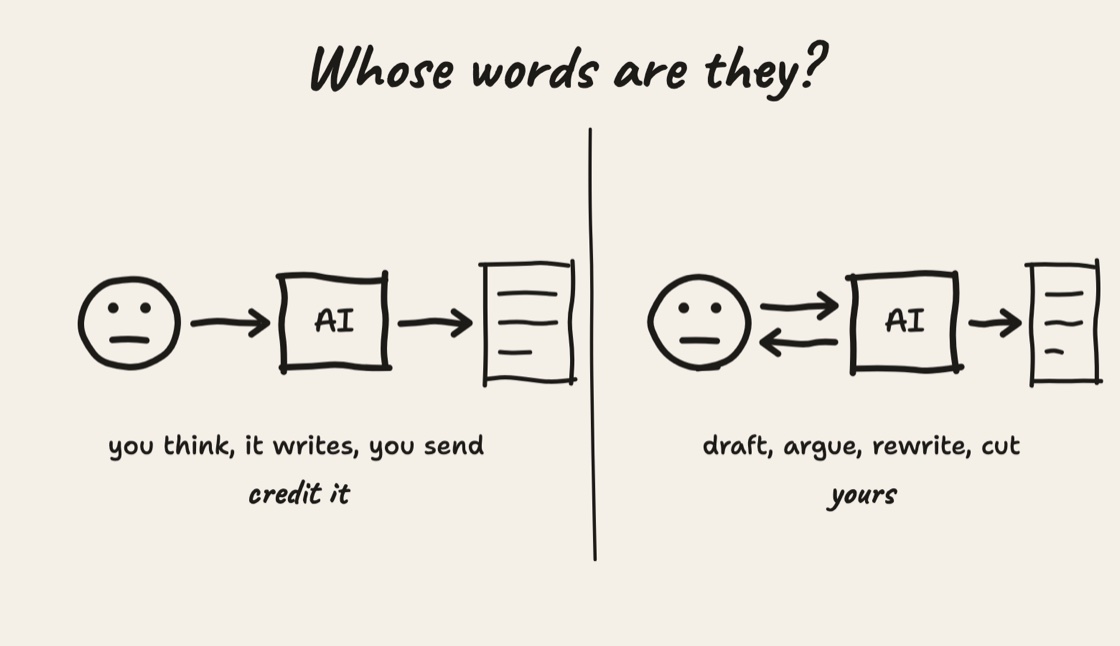
If your way of using AI is to have a thought, get it to write the thing, and send the thing, then yes, it did most of the work and it feels wrong not to credit it.
However, more and more of the people I talk to use it the other way round. They think with it. Draft, argue, get it to attack the reasoning, rewrite, cut. By the end the words are theirs because the thinking is theirs, and they'd stand behind every one of them.
[RESOURCE] Is what you've built legal
One for the builders. If you've made something with AI and put it in front of other people, a website, an app, a chatbot, there's a fair chance it breaks a law you've never read, not because you set out to, but because the tools never mention it.
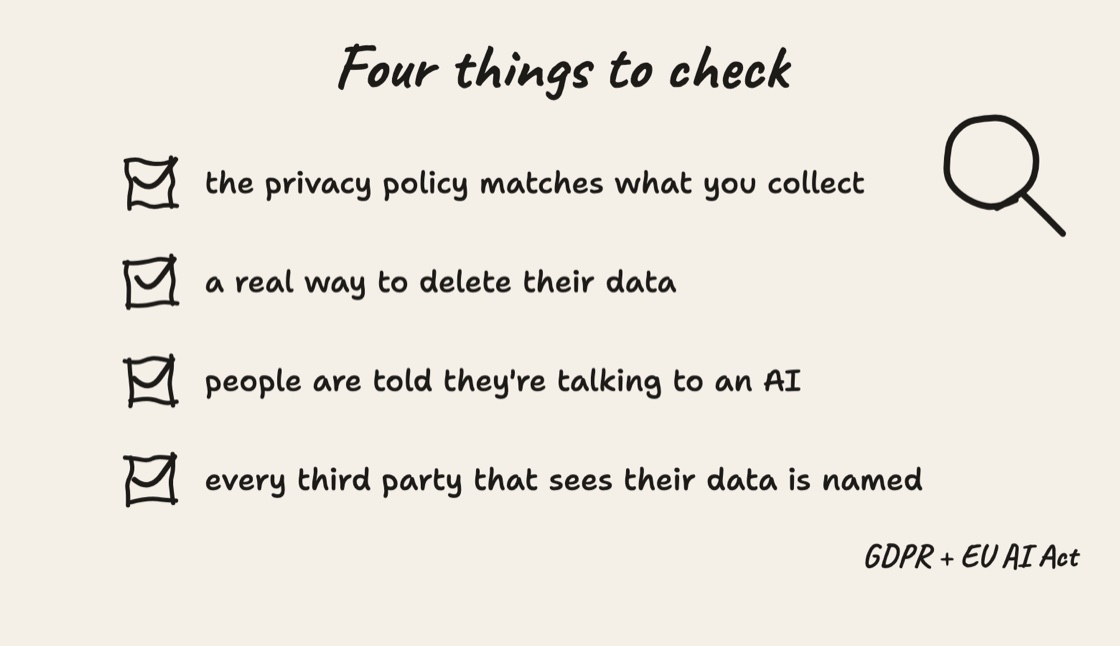
Some of it is GDPR, some of it is the EU AI Act, which since 2 August says you have to tell people when they're talking to an AI. The four that catch nearly everyone:
- A privacy policy that doesn't match what you collect. The template says name and email while you're storing phone numbers, uploads and chat history.
- No real way for a user to delete their data. "I'd do it by hand" doesn't count.
- Not telling people they're talking to an AI. That's the law now, not a nicety.
- Not naming every third party that sees their data. Your AI provider reads every message your users send, they should know.
So I built a skill that checks.
- Install it in Claude Code and it asks you ten questions the code can't answer, reads your repo, checks both against the law, ranks what it finds by legal risk, and offers to fix it.
- It's had a rebuild this week so it interviews you before it writes anything, because a policy written without knowing who you are is a template with the blanks guessed.
It isn't legal advice, but it's a proper first pass and the one I run on everything I ship, and there's a video on it coming too, so you're getting this one first.
[THE ECOSYSTEM] What the first six built
The half a dozen of you who signed up to test the agent ecosystem with me have now been through part 1 of it!
Every one of them has been incredibly complimentary about it, which I'm chuffed about. Thank you.
Here's a few of the awesome things they've set up:
- One has Claude pulling invoices out of the inbox and reconciling them, a job that used to eat an afternoon.
- One built their own CRM, so each week it goes through their clients, says who needs following up and how each one is doing.
- One is building a content machine, taking what they learn each week and turning it into posts for their own personal brand.
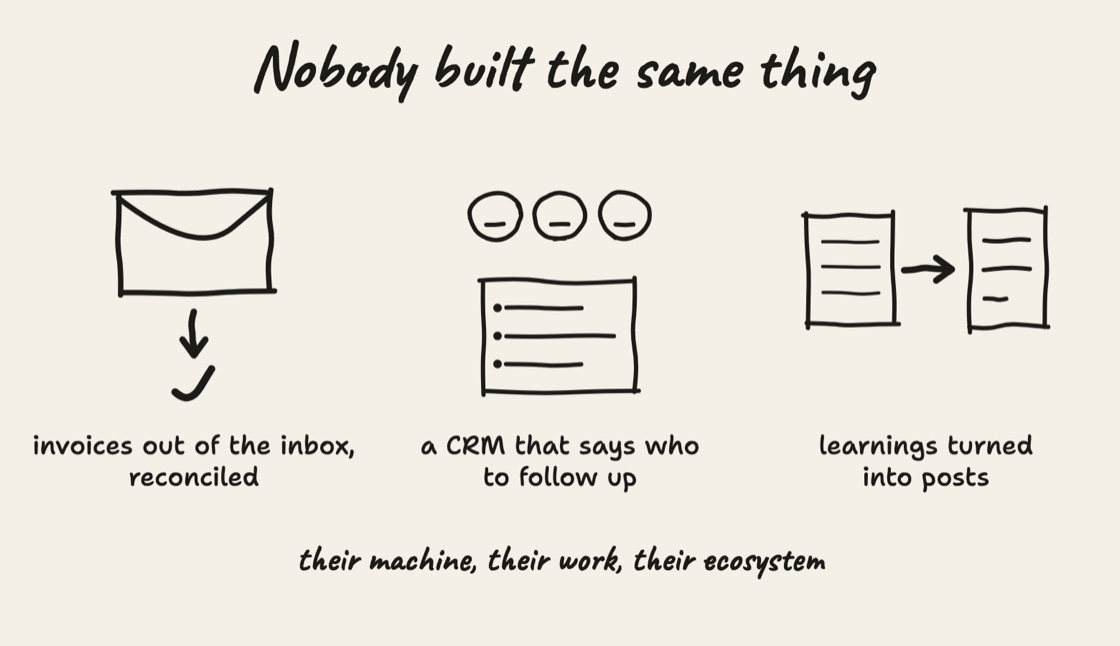
All set up by them, on their own machine, around their own work, which is the whole point.
If that sounds like the kind of thing that you need, book in for a call, I'd love to hear more.
Chat soon,
Oli